

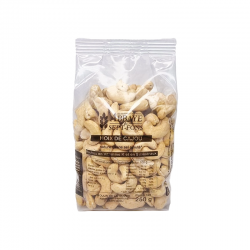
Cashew nuts
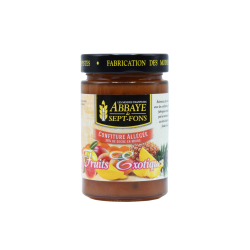
CONFITURE ALLEGEE FRUITS EXOTIQUES
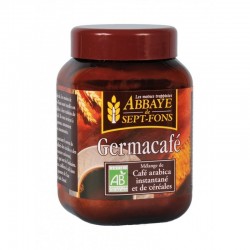
Germacafe - arabica and cereals - Organic
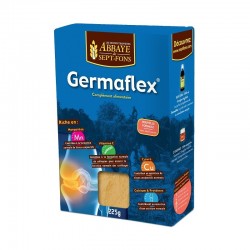
Germaflex - Monastery of Sept Fons
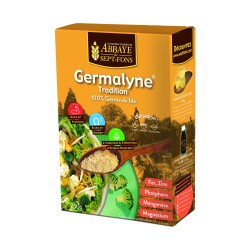
Germalyne Tradition - Abbey of 7 Fons
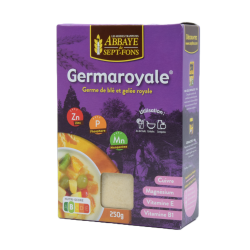
GERMAROYALE
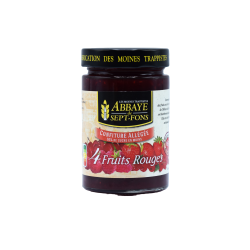
Light 4 red fruit jam
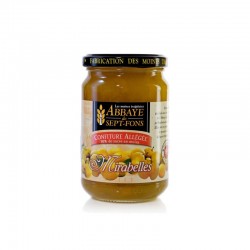
Light mirabelle plum jam
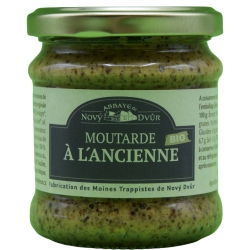
Moutarde BIO à l'ancienne
A Cistercian abbey on the Loire since 1132
It all began in 1132. A handful of monks left the Abbey of Fontenay, in Burgundy, to settle on land nobody wanted: marshes and silted-up arms of the Loire, near Diou, where the Besbre flows into the Loire. They were led by two brothers from the family of Saint Bernard. The monastery was first called Notre-Dame de Saint-Lieu. The name Sept-Fons came later, and people still debate whether it refers to seven springs or seven channels.
For almost nine centuries, the abbey weathered every storm without ever disappearing completely: looting during the Hundred Years' War and the Wars of Religion, a long decline, then a revival in the 17th century thanks to a young abbot, Dom Eustache de Beaufort, who led the community back to a simple and demanding life. Vocations poured in, and the abbey soon counted more than a hundred and thirty monks. The buildings you see today, with their mansard roofs, were completed in 1789... just in time for the Revolution. In 1791, the monks were driven out and the abbey was sold. Several of them paid for their faithfulness with their lives: the Church today honours Blessed Paul, Élie and Modeste, monks of Sept-Fons.
It was not until 1845 that Trappists from the Abbey of Le Gard, in Picardy, bought the abbey back. Prayer has never stopped there since. Better still, Sept-Fons has founded houses all over the world, from Latroun in the Holy Land to Nový Dvůr in the Czech Republic, and in Senegal in 2017.
The Moulin de la Trappe, birthplace of Germalyne
Faithful to the Rule of Saint Benedict, the monks live from their own work. For a long time, the farm was enough. Then something else had to be found. First came a brewery, around 1890: the beer won medals, but the accounts did not follow! The real answer came from the abbey's old grain mill.
Around 1930, the monks perfected a way of separating the germ from the wheat grain, then stabilising it so that it keeps its qualities and its light, nutty taste. Germalyne was born. It takes around 1,500 kg of wheat to obtain a single kilo of germ, which shows how precious this powder is! It quite literally saved the abbey, and four generations of French families have sprinkled it on their yoghurt or soup.
To this day, the Moulin de la Trappe is run by the monks. A dozen brothers, helped by a few employees, make, pack and ship the whole wheat germ range: Germalyne, Germacafé, Germaroyale, Germaflex... Meanwhile, the abbey farm keeps going, with around a hundred hectares, a herd of Normandy cows, an orchard, a vegetable garden and beehives.
Jams, nuts and mustard from Nový Dvůr
The other great workshop at Sept-Fons is the jam kitchen. We have chosen their reduced-sugar jams, made with plenty of fruit (65 to 67 g per 100 g) and 30% less sugar: fruit first, sweetness second.
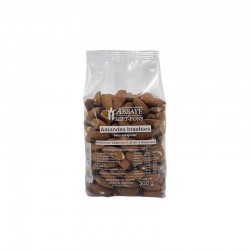
The monks also pack cashew nuts and unsalted almonds themselves at the abbey, in a protective atmosphere so they stay crunchy. As for the wholegrain mustard, it comes from their brothers at Nový Dvůr, in the Czech Republic, an abbey founded by Sept-Fons in 2002: a Trappist recipe, organic and made by hand.
Wheat germ every day: our advice
• Do not cook it. Wheat germ does not like heat, which damages its vitamins. Add it at the end, to a warm soup, a salad or a dairy dish.
• Start gently. One spoonful in the morning in a yoghurt or fromage frais, then increase little by little. Children can enjoy it from the age of 3, in small amounts.
• Keep it tightly closed. Somewhere dry, cool and away from light, and finish the bag within three to four months. A tip: pour it into a glass jar (an empty jam jar is perfect!).
• Mind the gluten. Wheat germ contains only traces of gluten, but it does contain some: it is not suitable for people with coeliac disease.
Two abbeys in the Allier
Between Chantelle and Sept-Fons, there is only one department to cross... and not even that, since it is the same one! We share with our Trappist brothers the same Bourbonnais land and the same conviction: a product made with care, by a community that lives from it, has something more. Every purchase helps the monks of Sept-Fons continue their life of prayer and work. And it helps us a little too, for which we thank you!
Frequently asked questions
What is Germalyne?
It is French wheat germ, separated from the grain and stabilised at the Moulin de la Trappe, then finely ground. The monks of Sept-Fons have been making it since 1930. It contains nothing else: no additives, no preservatives.
Does Germalyne contain gluten?
Yes, in very small amounts (between 8 and 420 mg/kg depending on the batch). It is therefore not suitable for people with coeliac disease. If you are sensitive to gluten, ask your doctor for advice.
Are Sept-Fons products organic?
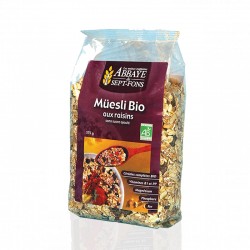
Some are: Germacafé, the muesli and the mustard are certified organic. Germalyne is not, because there is not enough organic wheat germ to make it: it takes tonnes of wheat to produce a single kilo!
Who makes the mustard?
The Trappist monks of Nový Dvůr, in the Czech Republic, a daughter house of Sept-Fons founded in 2002.
Where is Sept-Fons Abbey?
In Diou, in the Allier, where the Besbre meets the Loire, in the east of the department. The abbey welcomes guests and has a shop at the entrance to the monastery.