

Almond paste (Marzipan) with Honey - Barroux Abbey
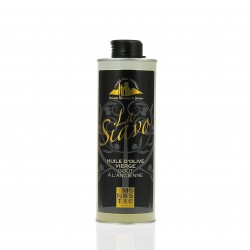
Extra virgin olive oil - La Siavo - Barroux Monastery
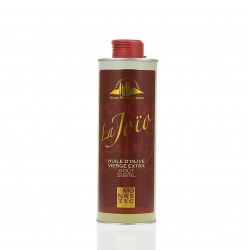
Joïo - Mature, sweet and tender olive oil
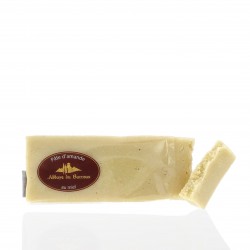
Marzipan almonds, honey and nuts - Barroux monastery
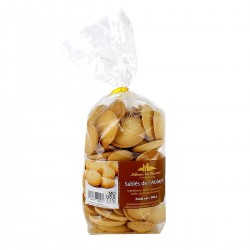
Pure butter shortbread - Abbaye Sainte Madeleine du Barroux
From the chapel of Bédoin to the slopes of Mont Ventoux
The story began modestly, in August 1970. A Benedictine monk from the Abbey of Tournay settled alone near a small chapel dedicated to Saint Mary Magdalene, in Bédoin, in the Vaucluse. He expected to live there as a hermit. But a few days later, a young man knocked at the door asking to become a monk, then another... By 1971 there were already eleven of them, and the old ruined priory was restored as best they could.
The chapel soon became too small: some brothers even lived in a caravan! In 1978, the community bought thirty hectares of land in the commune of Le Barroux, at the foot of Mont Ventoux. The foundation stone was laid in March 1980. It bears the monastery's motto, "Pax in lumine", peace in the light. The monks moved in just before Christmas 1981, with no heating or electricity, but with great joy. The monastery, built of local stone in the Romanesque style, became an abbey in 1989.
The community grew so much that it founded new houses: in 2002, eight brothers left to found the monastery of Sainte-Marie de la Garde, in Lot-et-Garonne, and in 2026, a dozen monks took up monastic life at Bellefontaine Abbey, in Anjou. Close by, just a few hundred metres away, lives another community: the Benedictine nuns of the Abbey of Notre-Dame de l'Annonciation, founded in 1979.
A mill at the heart of the monastery
At Le Barroux, the day is shared between the Divine Office, sung in Gregorian chant, and work: baking, carpentry, bookbinding, the vegetable garden, the vines and the olive trees. But what makes this abbey unique is its mill. According to the monks, theirs is today the only monastery in France that presses its own olives. Other communities grow olive trees, but send their harvest to an outside mill.
The olives come from the monastery's own trees and from neighbouring growers. The monks mainly use two local varieties, Verdale and Tanche, and sometimes a little Rougette or Picholine. On their dry, windswept hillsides, pests are rare, which allows sustainable, low-input growing. As for the oil, it is simply olive juice, extracted mechanically, with no heating and no additives at all.
Three oils, three temperaments
The names of the oils are Provençal, and each one recalls a passage in the Bible where oil is held in honour.
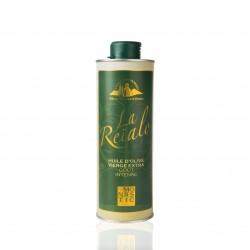
• La Reialo, "the Royal". A green fruity oil, made mostly from Verdale. It is lively, with a peppery kick and notes of fresh grass and artichoke. This is the oil for salads, ripe tomatoes and fresh goat's cheese.
• La Joïo, "Joy". A ripe fruity oil, from olives picked later, Verdale and Tanche. Gentle and tender, with hardly any pepperiness, it brings to mind almonds and red berries. Perfect on delicate fish, carrots or courgettes... and even a drizzle over vanilla ice cream!
• La Siavo, "the Smooth". The oil of days gone by. Before pressing, the olives rest for a few days, which develops aromas of candied olive, mushroom and sometimes cocoa. A treat on potatoes, a leg of lamb or mashed potato.
Treats from the workshops: marzipan, nougat and shortbread
At Le Barroux, the bakery does not stop at daily bread: it also makes sweet treats, to the great delight of visitors to the shop.
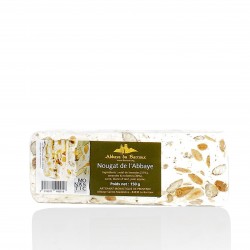
We have chosen two of their marzipans, simple and honest: one with almonds and honey (40% almonds), the other where walnuts join the almonds (35% almonds and 13% walnuts). With no colourings or preservatives, they can be cut into thin slices to go with a coffee. The white nougat, made in the monastic workshops of Le Barroux, brings together lavender honey, almonds and hazelnuts in a 150 g bar: all the scent of Provence in a few bites. Finally, the all-butter shortbread, made with flour, butter, sugar and eggs, has that crunch that then melts in the mouth. It is hard to stop at just one!
Our tips for enjoying them
• Keep the oil protected. Heat and light are its two enemies. The metal bottles already protect it: store them in a cool cupboard, away from the cooker.
• Taste as they do at the mill. Pour a little of each oil onto a plate, smell them first, then dip in a piece of fresh bread. Start with the Joïo, the gentlest, then the Reialo, and finish with the Siavo.
• Use the oil raw for its aromas. A drizzle at the last moment is the best way to enjoy their nuances.
• Cut the nougat cleanly. A knife run under hot water and wiped dry slices the bar without crushing it.
• Think about allergies. The nougat and marzipans contain nuts. The shortbread contains gluten, milk (the butter) and eggs, and the nougat contains egg white.
At Le Barroux as at Chantelle
Between Mont Ventoux and our Bourbonnais there are a few hundred kilometres, but one and the same Rule: that of Saint Benedict, which asks monks and nuns to live from their work. At Le Barroux, that work smells of pressed olives and warm bread. With us, it smells more of soap! By buying these products, you help a community continue its life of prayer. Thank you on their behalf, and on ours too.
Frequently asked questions
Which olive oil should I choose?
For a lively, grassy oil, choose the Reialo. For a gentle oil that does not mask delicate flavours, the Joïo. For the taste of days gone by, round and candied, the Siavo. All three are extra virgin olive oils from Provence, in 50 cl bottles.
Are the oils organic?
The monks do not present them as certified organic. They use sustainable, low-input growing, helped by their dry and windy land, and the oil is extracted without any chemical process.
What is in the marzipan?
Almonds, sugar, glucose and honey, with walnuts added in one of the two recipes. They contain no colourings or preservatives. As always, please check the label on the product you receive.
How should I store the nougat and shortbread?
Somewhere dry, at room temperature and away from heat. Once the shortbread bag is open, pop the biscuits into a tin: they will stay crunchy for longer.
Where is Le Barroux Abbey?
In Le Barroux, in the Vaucluse, about ten kilometres north-east of Carpentras, at the foot of Mont Ventoux. The monks run a shop at the entrance to the monastery. The nuns' abbey, Notre-Dame de l'Annonciation, is right next door.