
Pâté of Father Marc - French Monastery - la Trappe
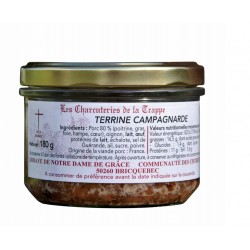
Rustic terrine - Abbey of Bricquebec
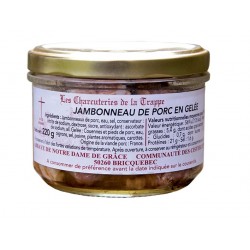
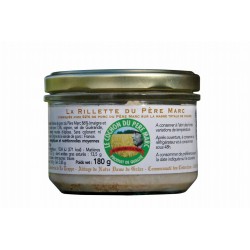
A parish priest, a marsh and three mills
In the early 19th century, Father Bon Onfroy, parish priest of Digosville, dreamed of becoming a monk. His bishop was keen to keep such a good priest. So he set one condition: that he found his monastery within the diocese, where so many abbeys had been emptied by the Revolution. The problem: the priest did not have a penny. In the end he was offered a marshy plot at Bricquebec that nobody wanted, along with three mills. He accepted, without much enthusiasm, and the abbey was born on 13 July 1824.
To learn the Cistercian way of life, the young community was helped by three monks from Port-du-Salut, in the Mayenne. As early as 1825, Rome attached it to the Trappists. The church was consecrated in 1834 and, two years later, the priory became an abbey: the founder became its first abbot, taking the name Dom Augustin. The early years were so hard that he went to ask the holy Curé of Ars for advice, and was encouraged to hold firm. He was right to listen!
And the name Notre-Dame de Grâce? It comes from the feast of the Annunciation, which the parish of Bricquebec celebrated. As for Bricquebec, it is a name of Scandinavian origin, combining the hill and the stream.
Farmers, cheesemakers, and pioneers as far as Japan
The monks drained the marsh and built mills and a farm. In the late 19th century, an abbot with a good head for business, Dom Germain Furet, equipped the abbey with farm machinery, a piggery and the very first cheese dairy in the area. For decades, "la Trappe de Bricquebec" cheese made the brothers famous throughout Normandy.
His successor, Dom Vital Lehodey, was a spiritual master whose book "Holy Abandonment" is still read today. He was also the one entrusted with the first Trappist foundations in Japan: a monastery of monks at Tobetsu in 1896, then a monastery of nuns in 1898. From these seeds several Japanese monasteries have grown. From 1914 to 1918, the abbey served as an auxiliary hospital for wounded soldiers. After the Second World War, the cheese dairy was sold, and the community had to find another way to make a living.
Père Marc's pigs
The answer came in the late 1960s, with a brother from a farming family: Père Marc. He started raising pigs with around forty sows, without really knowing how to go about it! The herd grew, and the brothers decided to process their own meat: the Charcuteries de la Trappe were born.
In 1997, the piggery had taken up so much room that it was spilling over into the life of prayer. The monks stopped raising pigs, but kept the charcuterie workshop. A year later, the star of the house was born: the Pâté du Père Marc. What makes it special is that it is made with the whole pig, not just the belly. Today, employees make the charcuterie, following the abbey's recipes.
Six jars for a Normandy picnic
Here is what we have chosen from our brothers at Bricquebec:
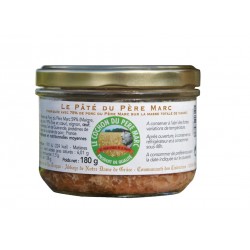
• Pâté du Père Marc. The great classic: lean meat, belly, liver and heart of pork, onion, egg and Guérande salt.
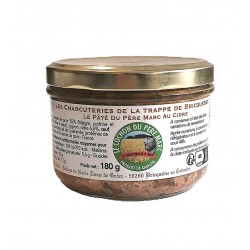
• Pâté du Père Marc with cider. The same recipe, lifted with cider (6.6%): all of Normandy in a jar.
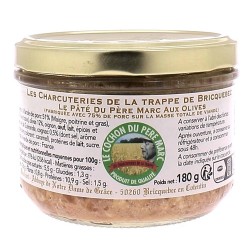
• Pâté du Père Marc with olives. Green olives (12%) and a dash of cognac, for a more well-travelled version.
• Pure pork rillettes. 93.5% meat, onion, pepper, and that is all: no colourings, no preservatives.
• Country terrine. 80% pork, with shallot and garlic, for lovers of bold flavours.
• Ham knuckle. Generous pieces set in a jelly flavoured with carrots, onions and herbs.
Our ideas for enjoying them:
• Take the jar out a little in advance. A pâté that is too cold loses its flavour: a quarter of an hour out of the fridge is enough.
• Rillettes love toast. Add a few gherkins and some thinly sliced red onion, and the aperitif is served.
• Ham knuckle can be eaten cold or warm. With a lamb's lettuce salad, or in a baguette spread with mustard: a sandwich for special days!
• A jar in your rucksack. Unopened, they keep at room temperature: perfect for a picnic.
Bricquebec and Chantelle, two houses of Saint Benedict
The Rule of Saint Benedict asks monks and nuns to live from the work of their hands. At Bricquebec, that means pâtés; at Chantelle, soaps and creams. The products change, the Rule stays the same! The Normandy community is small today, but it continues to pray, to welcome guests in its guesthouse and to keep close ties with its foundations in Japan. Every jar you buy helps it carry on this life. And it makes your toast very happy too, which does no harm.
Frequently asked questions
Who makes the Charcuteries de la Trappe?
They are prepared in the charcuterie workshop of Bricquebec Abbey, following recipes developed by the monks. The production is carried out by employees, while the brothers devote themselves to prayer and the life of their community.
What is in the Pâté du Père Marc?
Pork (lean meat, belly, fat, liver and heart), onion, egg, milk, spices and Guérande salt. Please note that it therefore contains milk and egg. The pork comes from France.
How should I store the jars?
Unopened, they keep at room temperature until the date shown on the packaging. Once opened, put them in the fridge and eat them quickly.
Does the ham knuckle contain preservatives?
Yes, like most cooked hams, it contains sodium nitrite. The pure pork rillettes, on the other hand, contain none.
Where is Bricquebec Abbey?
In Bricquebec-en-Cotentin, in the Manche, about twelve kilometres from Valognes. The abbey has a shop, where you can find its charcuterie, and a guesthouse for people who wish to make a retreat.